Is China Still the Best Place to Source Products in 2026?
 Hidayat Khan·May 2026·9 min read
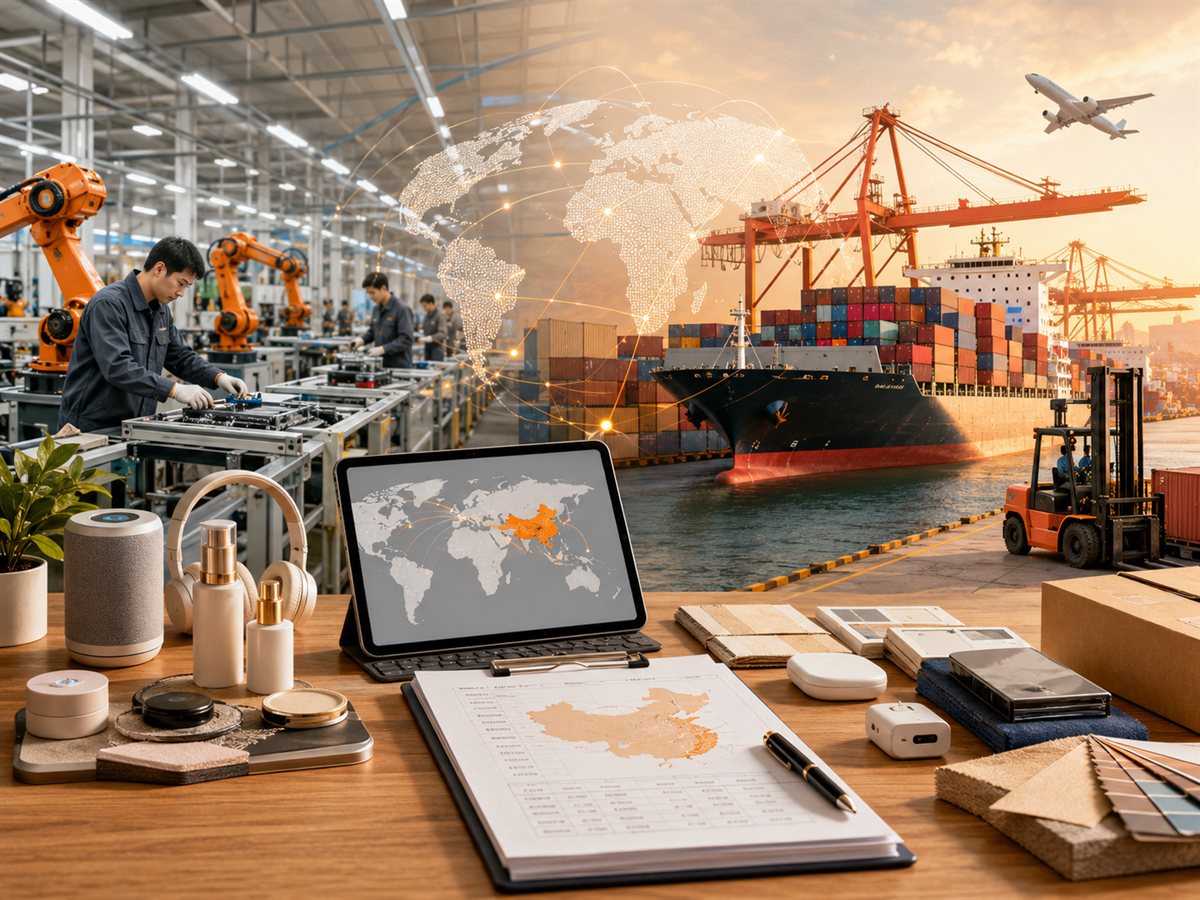
Every few months a new headline tells importers that China is finished as a manufacturing hub and that everyone is moving to Vietnam or India. The reality on the ground is more nuanced. China has lost its position as the cheapest option in many categories, but cheapness was never the only reason buyers came here. This article walks through where China still leads in 2026, where it is slipping, and the questions you should actually ask before you decide where to place your next order.
Why China's Factory Ecosystem Is Hard to Replace
China's real advantage was never just low labour cost. It is the density of the supply chain. In a single industrial cluster like Shenzhen for electronics or Yiwu for small commodities, you can find component suppliers, moulding shops, assembly factories, printers, and packaging vendors within a short drive of each other. That proximity is why a Chinese factory can quote, sample, tool, and ship faster than competitors who have to import half their inputs.
Speed and scale are the two strengths that keep buyers coming back. Need ten thousand units of a moderately complex product in six weeks? China can almost always do it. Need to scale from a thousand-unit test order to a hundred thousand units once your listing takes off? The same factory can usually grow with you without you re-sourcing from scratch. That flexibility across both small and large volumes is genuinely rare elsewhere.
Supplier variety is the third pillar. For almost any product you can imagine, there are dozens of factories competing for your business, which keeps quoting honest and gives you real fallback options if one supplier underperforms.
Product Categories Where China Still Dominates
China is not equally strong in everything, and pretending otherwise leads buyers to source the wrong things in the wrong place. Where China remains clearly ahead is anything that depends on a deep components ecosystem or precision tooling. Consumer electronics, lithium batteries and chargers, small kitchen appliances, and anything with custom plastic injection moulding are categories where the supporting supply chain simply does not exist at the same depth anywhere else yet.
The categories below are where, in our experience running orders, China continues to offer the best combination of capability, tooling, and price.
- Consumer electronics, accessories, and anything battery powered
- Custom injection-moulded plastics and complex hardware
- Small home and kitchen appliances
- Toys, gifts, and seasonal promotional products
- Beauty tools, packaging, and cosmetic components
- Sporting goods and fitness equipment with metal fabrication
China's real edge was never the cheapest labour. It is a supply chain so dense that speed, scale, and complexity all happen in one place.
Cost Changes You Should Plan For in 2026
If you sourced from China five years ago and have not run quotes recently, prepare for sticker shock. Labour costs in the coastal manufacturing hubs have risen steadily, raw material prices remain volatile, and the days of China being the automatic cheapest option are over for many low-complexity, labour-heavy goods like basic textiles and simple assembled items.
Two other costs deserve attention. Tariffs and trade policy continue to shift depending on your destination market, so the landed cost matters far more than the factory quote. And shipping rates remain unpredictable, swinging with fuel prices and capacity. The smart move is to compare total landed cost, not unit price, and to ask suppliers to hold pricing for a defined window rather than assuming a quote stays valid for months.
None of this means China is expensive in absolute terms. For complex products, the efficiency of the supply chain often still beats a cheaper labour market that has to import components and run longer lead times.
- Quote on landed cost, not factory unit price
- Confirm how long a price is locked before it expires
- Budget for shipping volatility, not last quarter's rate
- Check current tariffs for your specific product code and market
Managing the Quality Control Risks
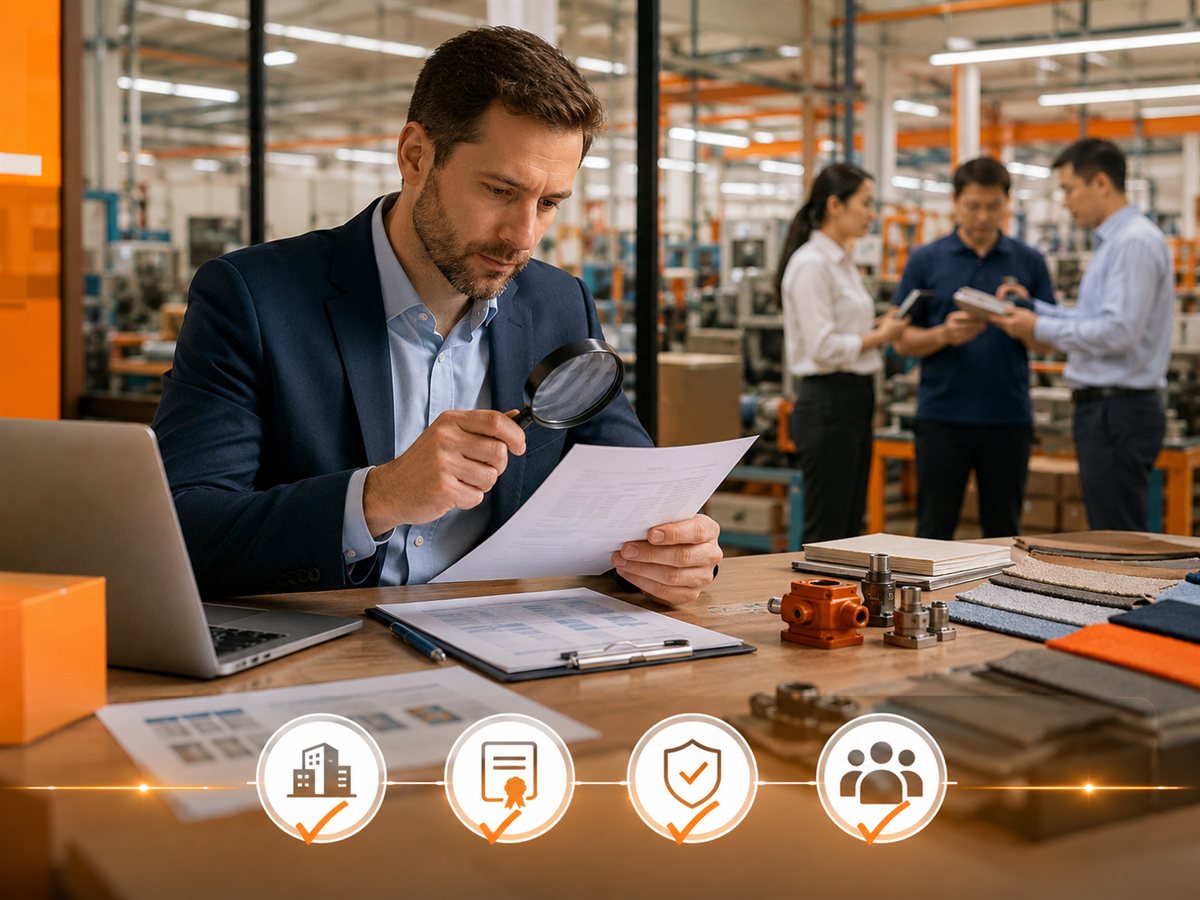
The most common reason a China order goes wrong is not fraud, it is a quality gap between the golden sample you approved and the mass-production run that ships. Factories under pressure may swap materials, skip a finishing step, or run a faster line to hit a deadline. These problems are entirely manageable, but only if you build control into the process instead of hoping for the best.
Treat quality as a sequence of checkpoints rather than a single inspection at the end. Approve a signed golden sample, document your specifications in writing, run an inspection during production rather than only after, and never release the final balance payment until a third party has confirmed the goods match. Watch for the warning signs below, which usually appear before the real problems do.
- A quote far below every other supplier
- Reluctance to provide a pre-shipment inspection
- Vague answers about which factory actually produces the goods
- Pressure to pay the full balance before inspection
- Samples that keep changing between rounds
When China Beats the Alternatives
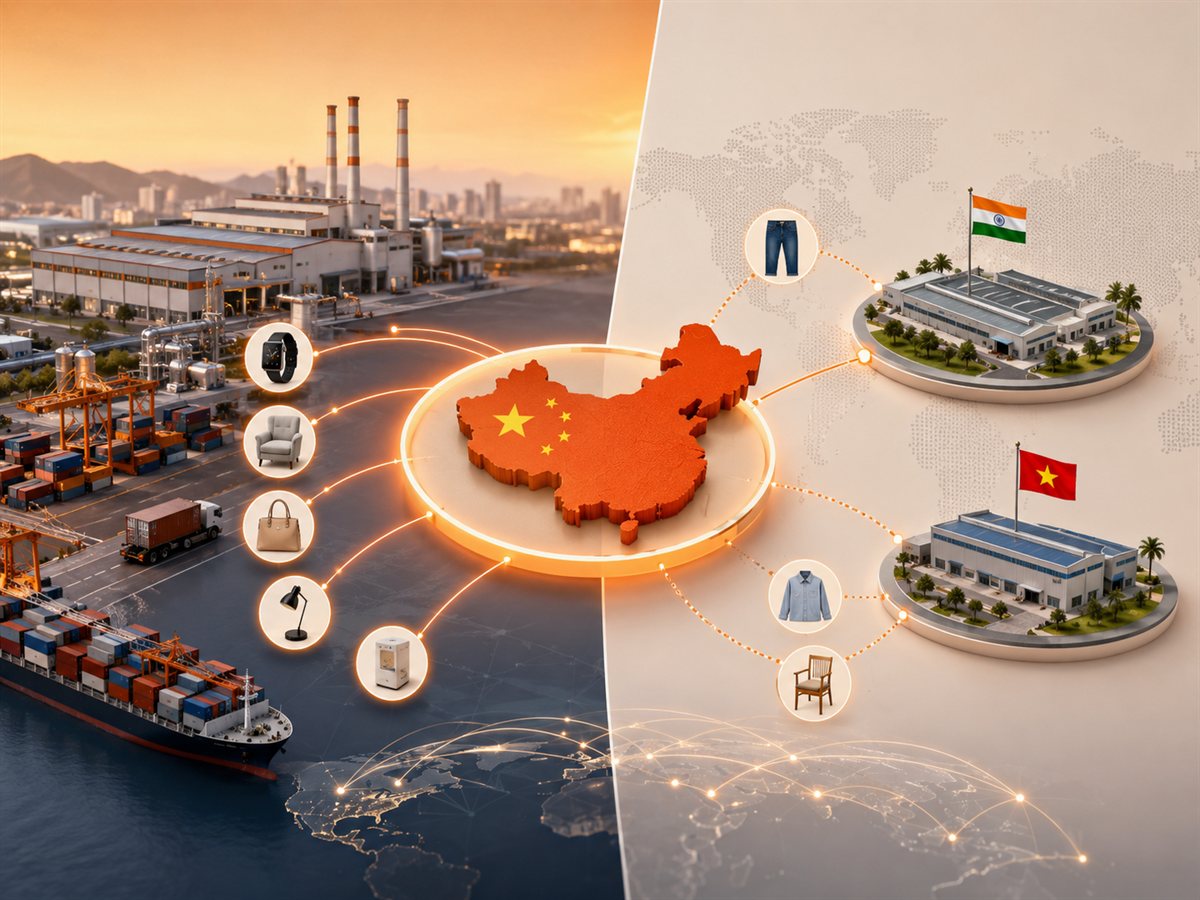
Vietnam, India, and other emerging hubs are genuinely competitive now, and for the right products they can beat China on cost or tariff exposure. Vietnam has become strong in furniture, footwear, and apparel. India is competitive in textiles, leather goods, and increasingly in some electronics assembly. If your product is labour-intensive, low in component complexity, and faces high tariffs from China into your market, it is worth getting quotes from these countries.
Where China still wins decisively is complexity, speed, and the ability to manage many moving parts in one place. If your product needs custom tooling, multiple components, tight tolerances, or a fast turnaround, the mature Chinese supply chain usually delivers a better total outcome even at a higher unit price. The honest answer is that the best sourcing base depends on your specific product, not on a headline. Many serious importers now run a hybrid strategy, keeping complex goods in China and shifting simpler, labour-heavy lines elsewhere.
Your Final Checklist Before Choosing China
Before you commit your next order to China, run through the questions below. They force you to weigh the real trade-offs rather than reacting to whatever the latest article claims. If most of your answers point to China, you are sourcing in the right place. If they do not, you now know exactly where to get comparison quotes.
This is also the point where a local partner earns their fee. A sourcing team on the ground in Guangzhou can verify the actual factory, run the inspections, and manage the freight so that the strengths of China's supply chain work for you instead of against you. At Summit Sourcing this end-to-end coverage is exactly what we handle for buyers who cannot be in China themselves.
- Does my product need custom tooling or many components?
- How fast do I need to scale once I prove demand?
- What is the landed cost after tariffs and shipping, not just the unit price?
- Do I have a quality control process with checkpoints, not just a final look?
- Have I compared at least one alternative country for this exact product?
- Do I have someone trustworthy on the ground to verify the supplier?
Key takeaways
- China is no longer the cheapest option for simple, labour-heavy goods, but it still wins on speed, scale, and supply-chain depth.
- It remains strongest for electronics, custom moulding, appliances, and any product needing many components or precision tooling.
- Compare total landed cost after tariffs and shipping, not the factory unit price.
- Build quality control as a sequence of checkpoints and never pay the final balance before inspection.
- Vietnam and India can beat China on labour-intensive, low-complexity products with high China tariffs.
- The right sourcing base depends on your specific product, not on a headline; a hybrid strategy often works best.
Sourcing from China? Let us handle the hard part.
Tell us what you're sourcing and we'll come back with a clear plan and quote within 24 hours.
Get a free quote