How to Avoid Supplier Switching Scams and Fake Factory Claims
 Hidayat Khan·May 2026·7 min read
A buyer in Toronto signed off on a perfect sample, wired a 30 percent deposit, and received a shipment four months later that failed his FDA compliance check. The factory he met (virtually, on a video call) did not actually make his product. They subcontracted it to a smaller workshop that quietly swapped the food-grade silicone for a cheaper material after sample approval. His $40,000 order became a write-off.
This is not rare. It is one of the three or four scenarios we see every month from importers who did not verify before paying. Here is the practical playbook for not being that buyer.
Factory vs trading company: the red flags
A real manufacturer has machines, workers, and a physical address that matches the production. A trading company has email, a brochure, and access to several factories. They are a middleman.
Trading companies are not inherently bad. Some are excellent partners for small orders or when you need multiple SKUs from different factories consolidated. The problem is when a trader sells themselves as a manufacturer and you pay manufacturer-direct prices for trader-level service.
Red flags that you are talking to a trader, not a factory:
- Their product range is too wide. A real factory makes one product family (kitchenware, electronics, apparel). A trader's catalog jumps from toys to LED lights to silicone bakeware.
- They cannot tell you their workshop layout, machine list, or worker count. Ask "how many injection moulding machines do you have", a factory answers immediately, a trader changes the subject.
- The business licence address does not match the production address. Always cross-check.
- They want to ship the sample from a different address than the factory location. Sample from one place, production "happens" somewhere else.
- They negotiate price by saying "let me check with my boss". A trader is checking with the actual factory.
None of these are illegal. They just mean you should adjust your expectations and your pricing.
Why suppliers switch materials after sample approval
This is the scam that costs buyers the most: a perfect sample, then a degraded production run.
The economics make it tempting. Factories quote tightly to win the order. When they actually produce, the temptation to substitute cheaper inputs is real. A 5 percent cost saving on $40,000 of materials is $2,000 in their pocket, money you will never recover unless you catch it.
What gets substituted most often:
- Plastics: food-grade resin becomes industrial-grade. Looks identical, fails compliance testing.
- Metals: 304 stainless becomes 201 (cheaper, rusts faster). Same finish, different alloy.
- Textiles: the advertised fabric weight drops 10 to 15 percent. Same look on the rack, falls apart sooner.
- Electronics: branded components become unbranded clones. Works for 8 weeks, fails the warranty period.
- Packaging: carton wall reduces from 5-ply to 3-ply. Saves money, fails the trip.
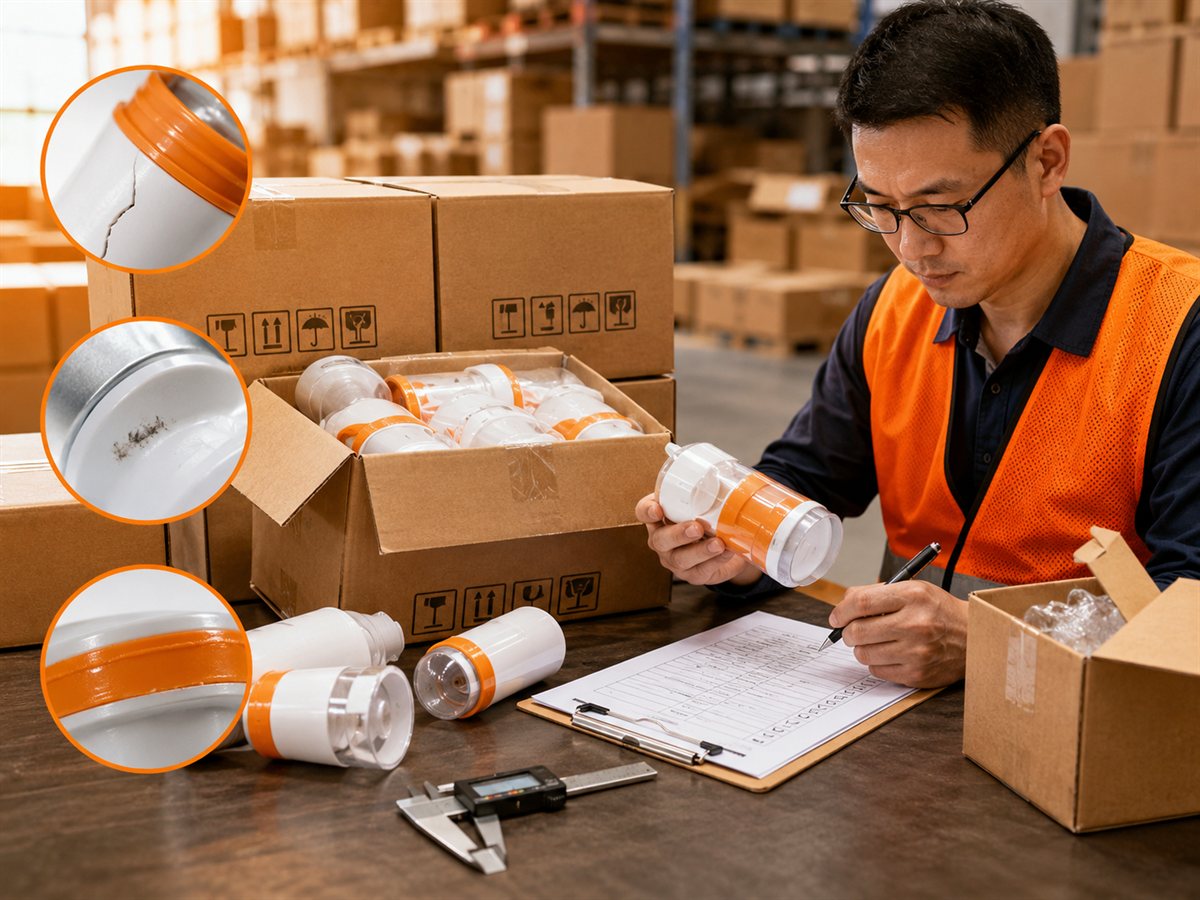
The protection is simple: random samples pulled from the production batch and tested against the approved sample. Most factories will not pull this if they know you are inspecting. The ones that do are the ones to drop.
A pre-order factory audit is $400 to $800 depending on location and depth. It feels expensive until you have lost $40,000 on a bad supplier.
How to check the business licence and production capability
Every legitimate Chinese factory has a business licence registered with SAIC. The licence shows the registered company name (in Chinese), the registered address, the legal representative, the registration capital, and the business scope.
You verify it through the National Enterprise Credit Information Publicity System, a free official Chinese government database. A Chinese-speaking sourcing agent or freight forwarder can pull the report in 24 hours.
What to check on the report:
- The Chinese company name matches the brochure
- The registered address matches the factory address they gave you
- The business scope includes manufacturing of your product category
- The company has been operating at least 3 to 5 years (newer is not always bad, but carries more risk)
- The legal representative is not on a credit blacklist
If any of these do not line up, ask why. A real factory has clean paperwork and is happy to share it.
Why a factory audit matters before big orders
A pre-order factory audit verifies what the licence cannot:
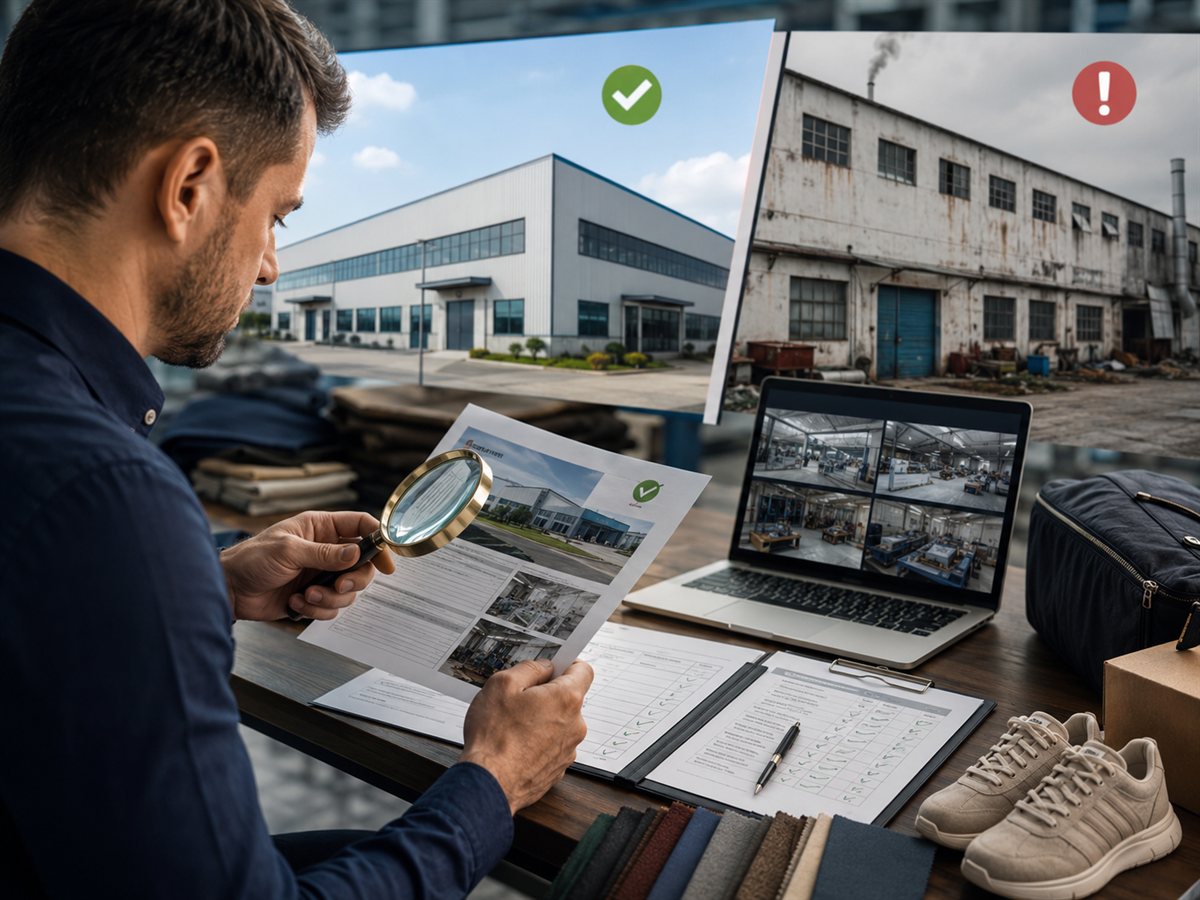
- The factory actually exists at the registered address
- The production lines match what they claimed
- The worker count, certifications (ISO, BSCI, Sedex), and safety standards are real
- Their current capacity matches the order size you are considering
We have done audits where the "factory" was a residential apartment with a printed brochure. We have also done audits where everything checked out and the buyer went on to ship six containers a year with that factory. Both happen, and both are worth the audit cost.
Five things to do before paying any deposit
- Run a SAIC business licence check on the legal entity, verify Chinese name, address, and scope.
- Insist on a video call from the factory floor. Not a meeting room. Ask to see machines running, materials in storage, and finished goods. Notice what is around them.
- Sign an NNN agreement before sharing your designs or specifications. A standard non-disclosure, non-use, non-circumvention contract written for Chinese jurisdiction.
- Structure deposit terms so a meaningful portion releases only against passed inspection. Never 100 percent upfront, never 50/50 with a new supplier.
- Book a factory audit if the order is above $20,000. The audit fee is the cheapest insurance you will buy.
The buyers who never get scammed are not smarter. They run this checklist before every new supplier. The ones who get burnt skipped one of these steps because the price was too good to wait.
Key takeaways
- A "factory" with a wide product range is probably a trading company. Both can work, but the pricing should reflect it.
- Material substitution after sample approval is the most common scam. Random batch testing prevents it.
- SAIC business licence verification catches the fake addresses and the wrong business scopes for under $100.
- A pre-order factory audit ($400 to $800) costs less than 1 percent of most orders and saves the other 99.
- Sign an NNN agreement before sharing designs, and never wire 100 percent of the deposit before inspection.
Sourcing from China? Let us handle the hard part.
Tell us what you're sourcing and we'll come back with a clear plan and quote within 24 hours.
Get a free quote