Common Quality Inspection Mistakes Importers Make Before Shipment
 Hidayat Khan·Mar 2026·9 min read
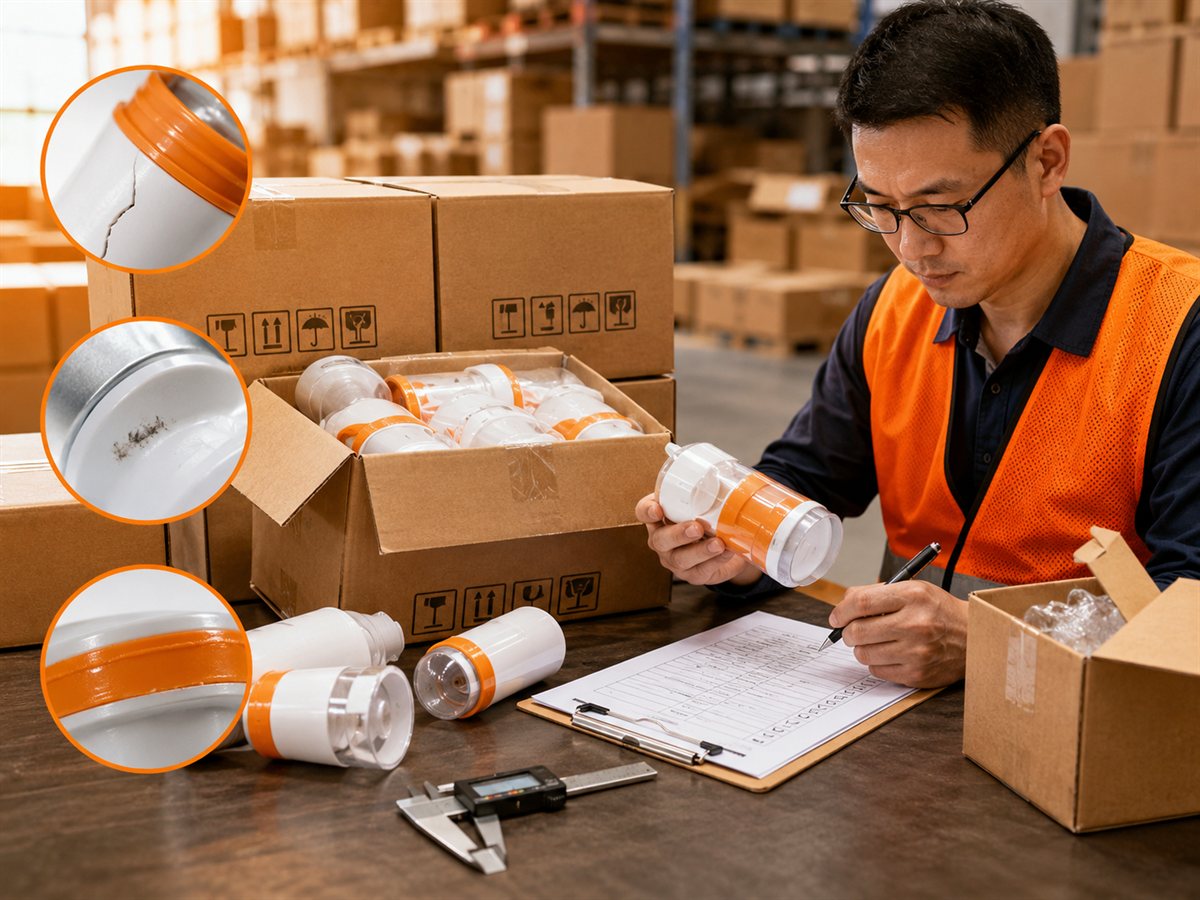
A defective shipment rarely fails at the customer's door. It fails on the factory floor, weeks earlier, while you were busy chasing the next order. By the time bad goods reach your warehouse, your options are bad, worse, and lawsuit. This guide walks through the six inspection mistakes we see importers make again and again before shipment, and the practical fix for each, so you catch problems while you can still do something about them.
Skipping inspection to save money
The cheapest inspection is the one you don't pay for, until the goods arrive. Skipping a pre-shipment inspection to save a few hundred dollars is the most common false economy in importing. A single inspection on a full container costs less than what you'll spend re-labeling, reworking, or scrapping a defective batch, and a fraction of what you lose when negative reviews and returns pile up on a hot listing.
The trap is that skipping works fine, until it doesn't. You run three smooth orders with a supplier, decide inspections are an unnecessary expense, and then the fourth order ships during a busy season when the factory quietly subcontracted half the run. Treat inspection as a fixed cost of doing business, like freight or duties, not as an optional extra you cut when margins feel tight. The orders where you're most tempted to skip, rush jobs, new products, peak season, are exactly the ones most likely to go wrong.
Not using AQL standards
"Check the quality" is not an instruction. If you tell an inspector or supplier to make sure the goods are good, you'll get a subjective opinion, and everyone's definition of good is different. The fix is the AQL system (Acceptable Quality Limit), the international sampling standard that tells you how many units to inspect from a batch and how many defects are allowed before you reject the lot.
AQL also forces a conversation you need to have anyway: classifying defects. A critical defect (a safety hazard, a product that doesn't function) should mean zero tolerance. A major defect (a flaw a customer would notice and complain about) gets a tighter limit, usually AQL 2.5. A minor defect (a small cosmetic blemish) gets a looser one, often AQL 4.0. Agree these levels with your supplier in writing before production, so a rejection is a contractual fact, not an argument.
Without AQL, every dispute becomes a negotiation about feelings. With it, you have a number both sides accepted in advance, and that changes the entire balance of power when something goes wrong.
- Critical defects: zero tolerance, unsafe or non-functional units
- Major defects: typically AQL 2.5, flaws customers will notice and return
- Minor defects: typically AQL 4.0, small cosmetic issues
- Set sample size by lot size using the standard AQL tables, not by guesswork
- Put the agreed AQL levels in your contract or PO before production starts
An inspection costs a few hundred dollars. A rejected container, a chargeback storm, and a season of lost reviews cost far more.
Poor product specifications before production
An inspector can only check your product against a standard, so if you never wrote the standard down, there's nothing to check against. Vague specs are the root cause of most "the goods are wrong" disputes, because the factory built exactly what they understood, which wasn't what you pictured. Color described as "dark blue" instead of a Pantone code, material listed as "premium" with no weight or grade, dimensions given without tolerances, each gap is a place where the factory's interpretation and yours quietly diverge.
Build a proper specification sheet before the first unit is made, and have it formally approved alongside a golden sample, a signed-off reference unit kept by both you and the factory. This sample becomes the physical definition of "correct." When an inspector arrives, they compare production against that golden sample and your spec sheet, not against a feeling. The more precisely you define the product up front, the less room there is for an expensive misunderstanding later.
- Exact colors as Pantone or printed swatches, never adjectives
- Materials with grade, weight (GSM), and finish specified
- Dimensions with acceptable tolerances (e.g. ±2mm)
- An approved golden sample held by both parties
- Functional and performance requirements written out in full
Inspecting too late, after goods are packed
Timing decides whether an inspection helps you or just confirms bad news. Many importers wait until everything is finished, boxed, taped, and palletized, then send an inspector. At that point, every problem found is a disaster: the factory has to unpack hundreds of cartons, fix or replace units, and repack, which blows your ship date and gives the factory every incentive to wave through borderline goods rather than start over.
The smarter sequence is to inspect earlier and in layers. A during-production inspection, run when roughly 20 to 30 percent of units are complete, catches a systemic defect while there's still time and material to correct the rest of the run. The pre-shipment inspection then verifies the finished, packed goods. Catching a tooling fault at 20 percent finished is a manageable conversation. Catching it after the whole order is sealed in cartons is a crisis, and crises always cost you leverage, money, or both.
Not checking packaging, labels and cartons
The product can be flawless and the shipment can still be a failure. Packaging, labels, and cartons are part of the product, and they're where compliance and logistics problems hide. A missing country-of-origin mark, a barcode that won't scan at the Amazon fulfillment center, a carton that fails a drop test, an inner box that's the wrong size, any one of these can get a shipment rejected, fined, or returned long after it has cleared the factory.
Make packaging an explicit line item in your inspection scope, not an afterthought. Have the inspector scan every barcode, verify label text and placement against your spec, confirm carton markings and dimensions, and check that the packaging actually protects the goods in transit. For sellers shipping into Amazon FBA, this matters even more, the warehouse won't fix your labeling, it will simply refuse or charge you for it. A box that arrives crushed or unscannable costs you the sale as surely as a broken product does.
- Retail and shipping labels scanned and matched to spec
- Required compliance marks present (origin, safety, recycling)
- Carton dimensions, weights and markings correct
- Drop test passed and protective packing adequate
- FBA prep requirements met if shipping to Amazon
Not requiring photo and video inspection reports
"We checked it and it's fine" is worth nothing without evidence. Whether your inspector is a third party, a sourcing partner, or the supplier's own QC team, you need a documented report with clear photos, and increasingly, video, covering the units inspected, the defects found, the packaging, the barcode scans, and the loading of the container. A written report alone can be vague or copy-pasted from a previous job; images don't lie about what was actually on the floor that day.
Photo and video documentation does double duty. It lets you make a remote go/no-go decision with real information instead of trust, and it becomes your proof if you later need to file a claim, dispute a payment, or hold a supplier accountable. Make a photographic report a non-negotiable deliverable of every inspection. If a supplier resists being documented, that reluctance is itself a quality signal, and a reason to look closer, not away.
Building inspection into the order, not bolting it on
Most of these mistakes share one root cause: inspection gets treated as a final checkpoint instead of a process woven through the whole order. The importers who rarely get burned define specs and AQL levels before production, inspect during the run, verify packaging at the end, and keep a documented trail throughout. None of it is exotic, it's discipline applied consistently.
This is also where a partner on the ground earns its keep. At Summit Sourcing we build inspection into the order from the first PO, agreeing standards up front, running during-production and pre-shipment checks, and sending you photo and video reports before goods are cleared to load. Handled that way, quality control stops being a gamble you take at the end and becomes a system that protects your margin from the start.
Key takeaways
- Skipping inspection to save a few hundred dollars routinely costs thousands in rework, returns, and lost reviews.
- Use AQL sampling standards and classify critical, major, and minor defects in writing before production.
- Write detailed spec sheets and approve a golden sample, so inspectors check against a defined standard, not an opinion.
- Inspect during production (around 20-30% complete), not only after goods are packed and sealed.
- Treat packaging, labels, barcodes, and cartons as part of the product, they fail shipments too.
- Require photo and video reports from every inspection as both a decision tool and dispute evidence.
Sourcing from China? Let us handle the hard part.
Tell us what you're sourcing and we'll come back with a clear plan and quote within 24 hours.
Get a free quote